Task-Driven Human–AI Collaboration
When to automate, when to collaborate, when to challenge
Overview
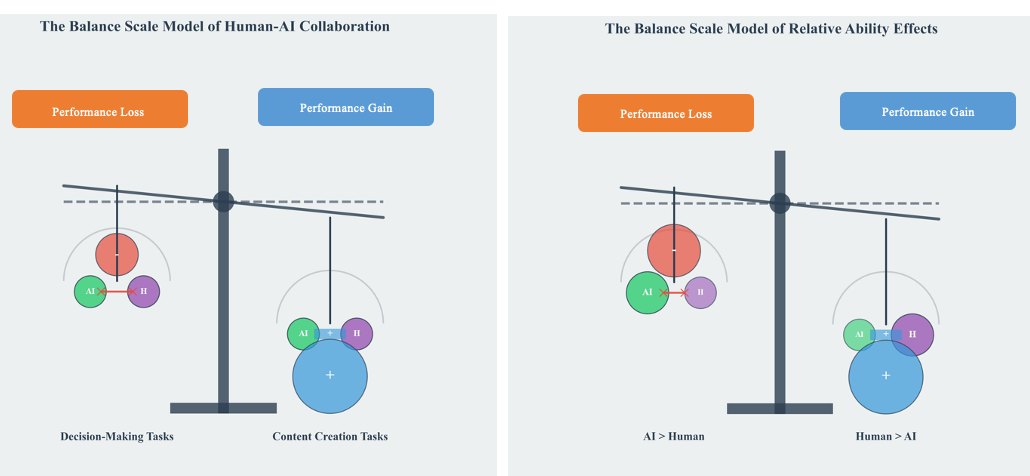
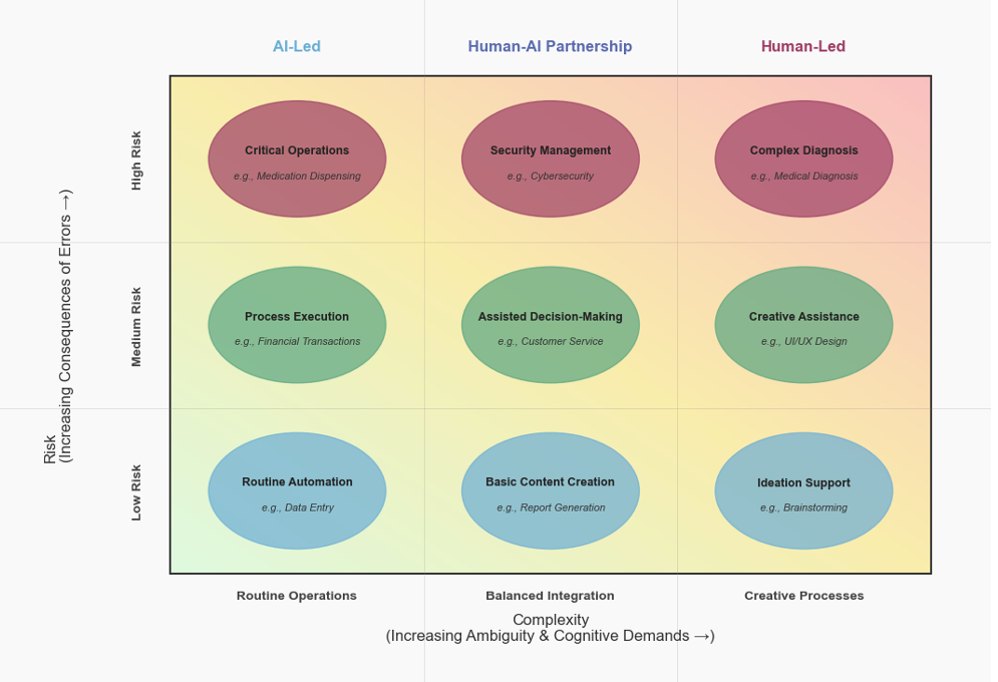
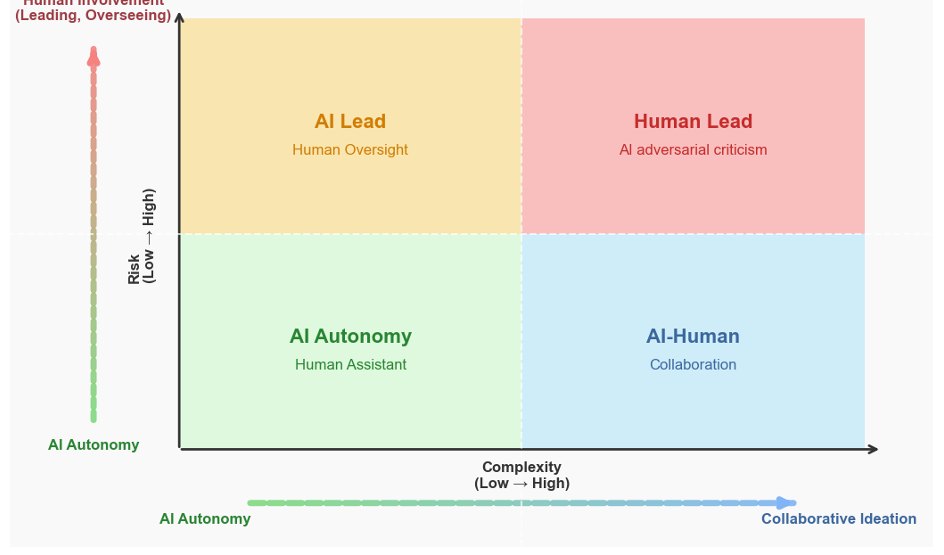
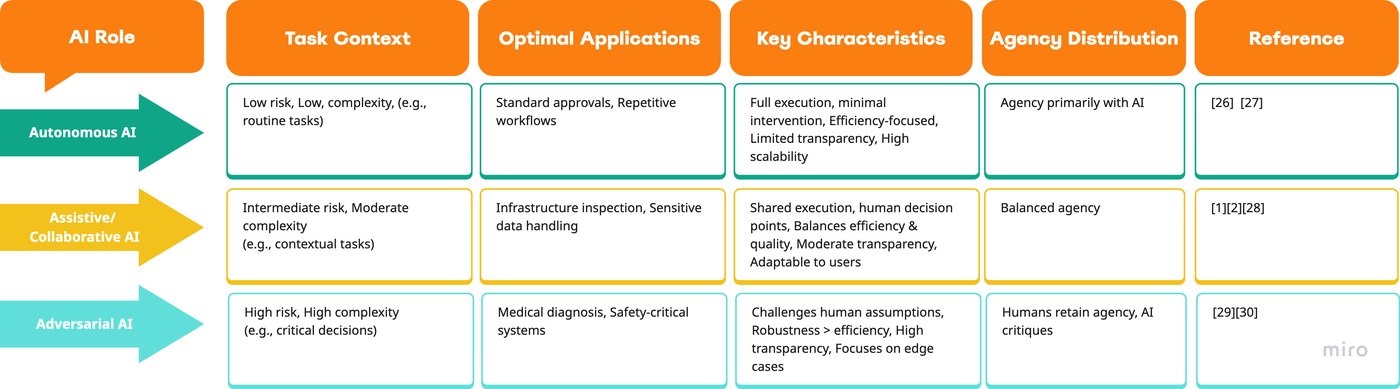
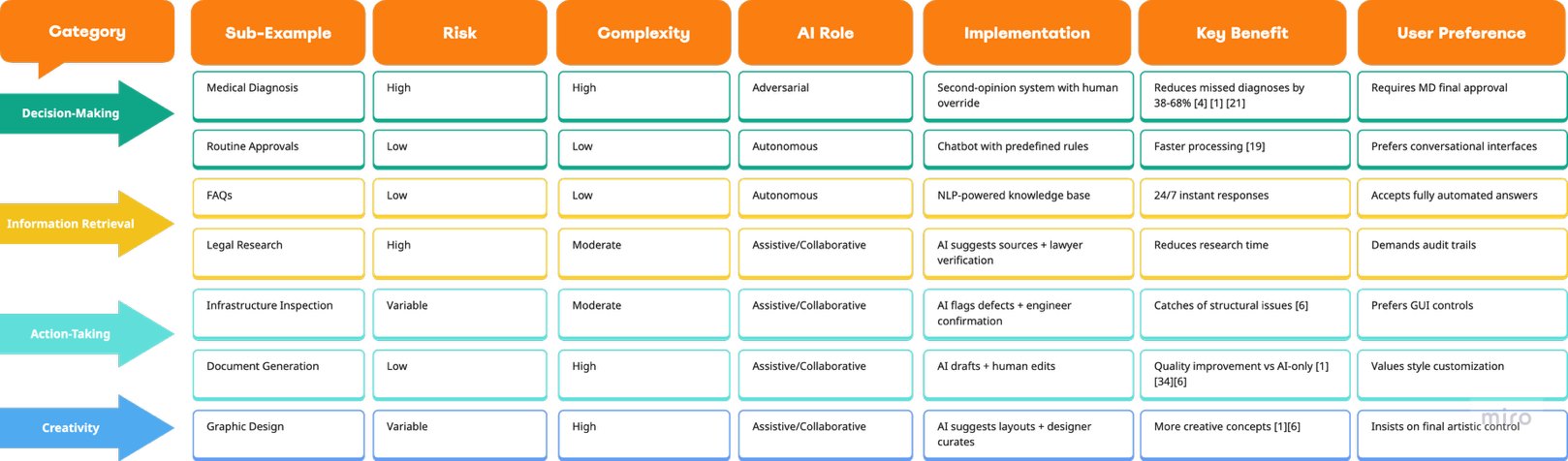
Human–AI teams often fail to reach real synergy. A meta-analysis of 106 experiments found that human–AI combinations perform, on average, worse than the best of humans or AI alone. This paper reverses the usual starting point: instead of asking what a technology can do, it analyzes the task, along dimensions of risk and complexity, and assigns AI one of three roles accordingly: autonomous, assistive/collaborative or adversarial. The result is structured guidance for automation that complements human judgment rather than replacing it.
Highlights
- Collaboration hurts decision tasks on average (g = −0.27) but helps creation tasks, so the task, not the tool, should decide the AI’s role.
- When humans outperform AI, teaming helps (g = 0.46); when AI outperforms humans, it hurts (g = −0.54).
- In high-risk, high-complexity work, AI should challenge human assumptions, for example as a second opinion in diagnosis or an anomaly flagger in audits.
- Routine, low-risk tasks can be safely automated, while high-risk routine tasks still need strict human oversight.
Framework
How it works
- Classify each task by risk (low, intermediate, high) and complexity (low, moderate, high).
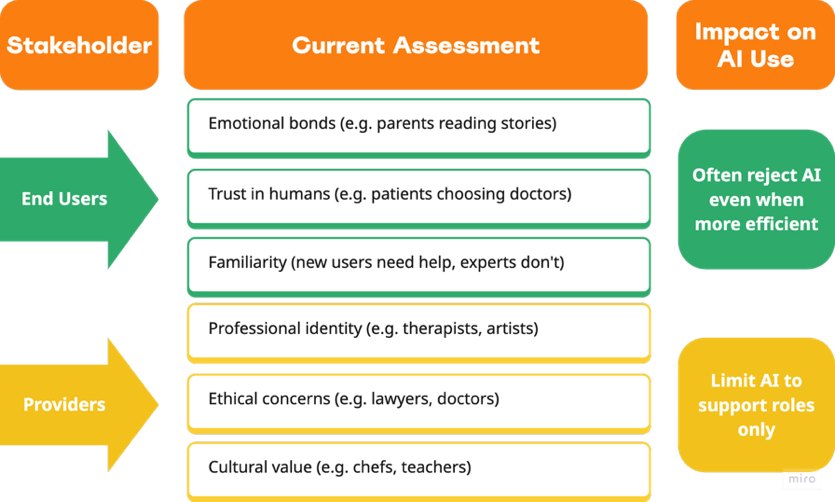
- Account for stakeholder preferences and task type (decision vs. creation).
- Match the task profile to an AI role, preserving meaningful human agency.
- Ground each mapping in current empirical findings on human–AI team performance.
Resources
Citation
Afroogh, S., Varshney, K. R., & D’Cruz, J. (2025). A task-driven human-AI collaboration: When to automate, when to collaborate, when to challenge. arXiv preprint arXiv:2505.18422.