LLMs and Childhood Safety
Identifying risks and proposing a protection framework for safe child–LLM interaction
Overview
LLMs now power tools that children use for learning, companionship and creative play, which raises safety, privacy, developmental and security risks. We conduct a systematic literature review of child–LLM interaction risks and organize the findings into a structured map that separates parent-reported concerns, empirically documented harms, and the gaps between perceived and observed risk. Comparing how surveys, incident reports, youth interaction logs and governance guidance define harm, we derive a protection framework with measurable targets for developers, educators and policymakers.
Highlights
- Parents’ concerns and documented harms do not always line up; the review maps where perceived and observed risks diverge.
- Different evidence sources define “harm” differently, which leads to conflicting mitigations.
- The framework pairs child-specific content safety and developmental sensitivity with security-grade defenses against prompt injection and multimodal jailbreaks.
- Each safeguard comes with a measurable target, from age-calibrated readability to monitoring transparency.
Framework
Evidence streams
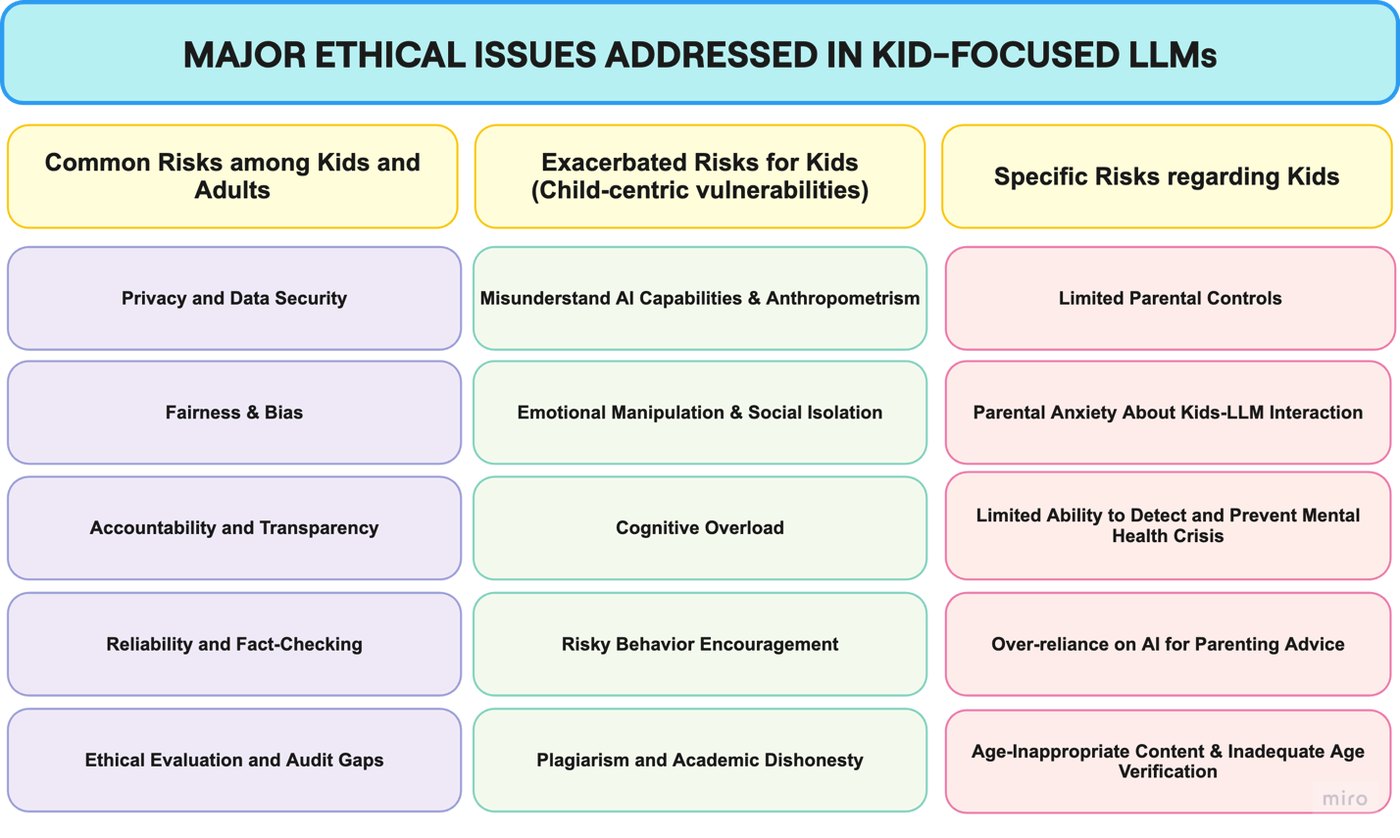
- Parent-reported concerns
- Empirically documented harms
- Gaps between perceived and observed risk
Risk areas
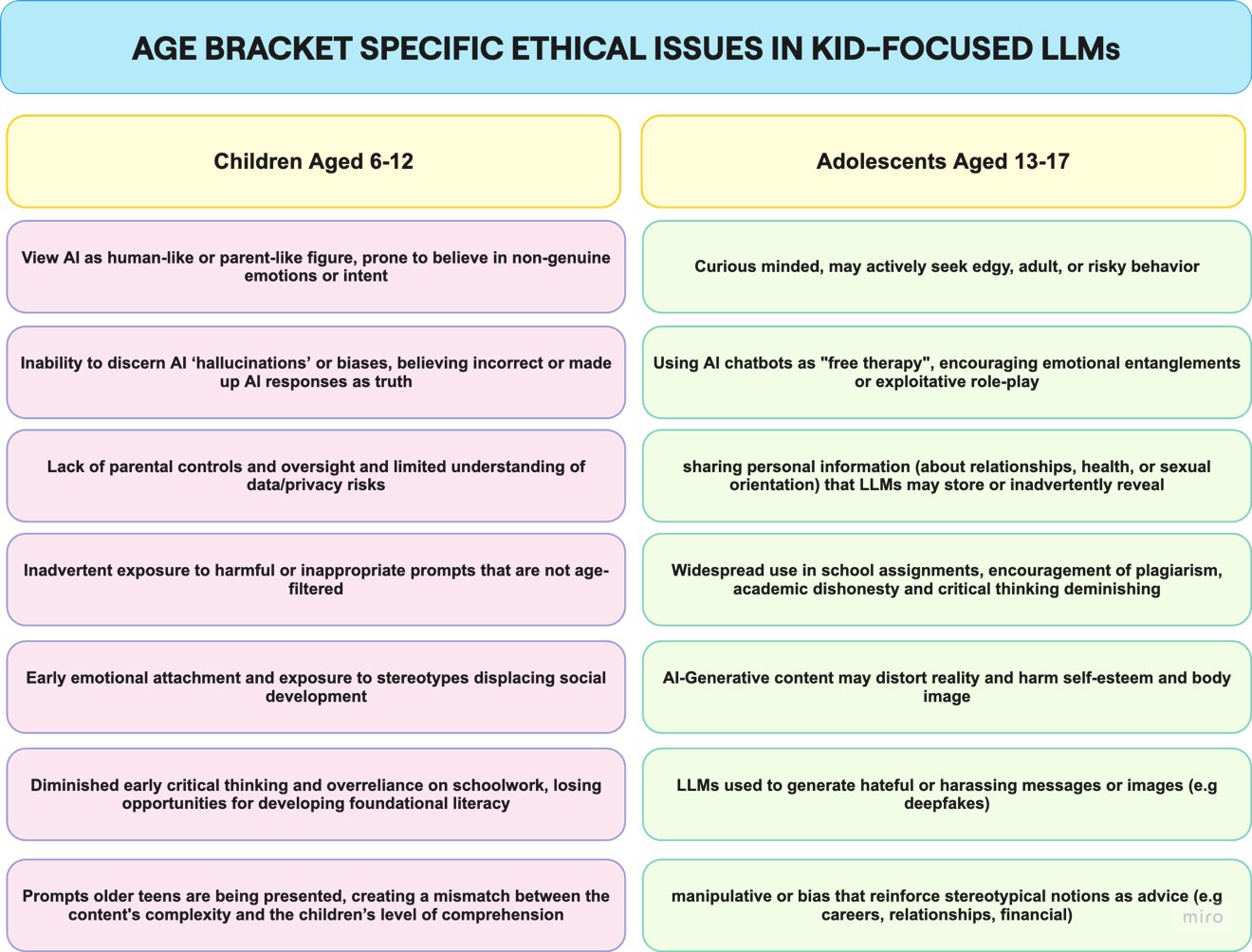
- Content safety
- Privacy
- Developmental risk
- Security: prompt injection and multimodal jailbreaks
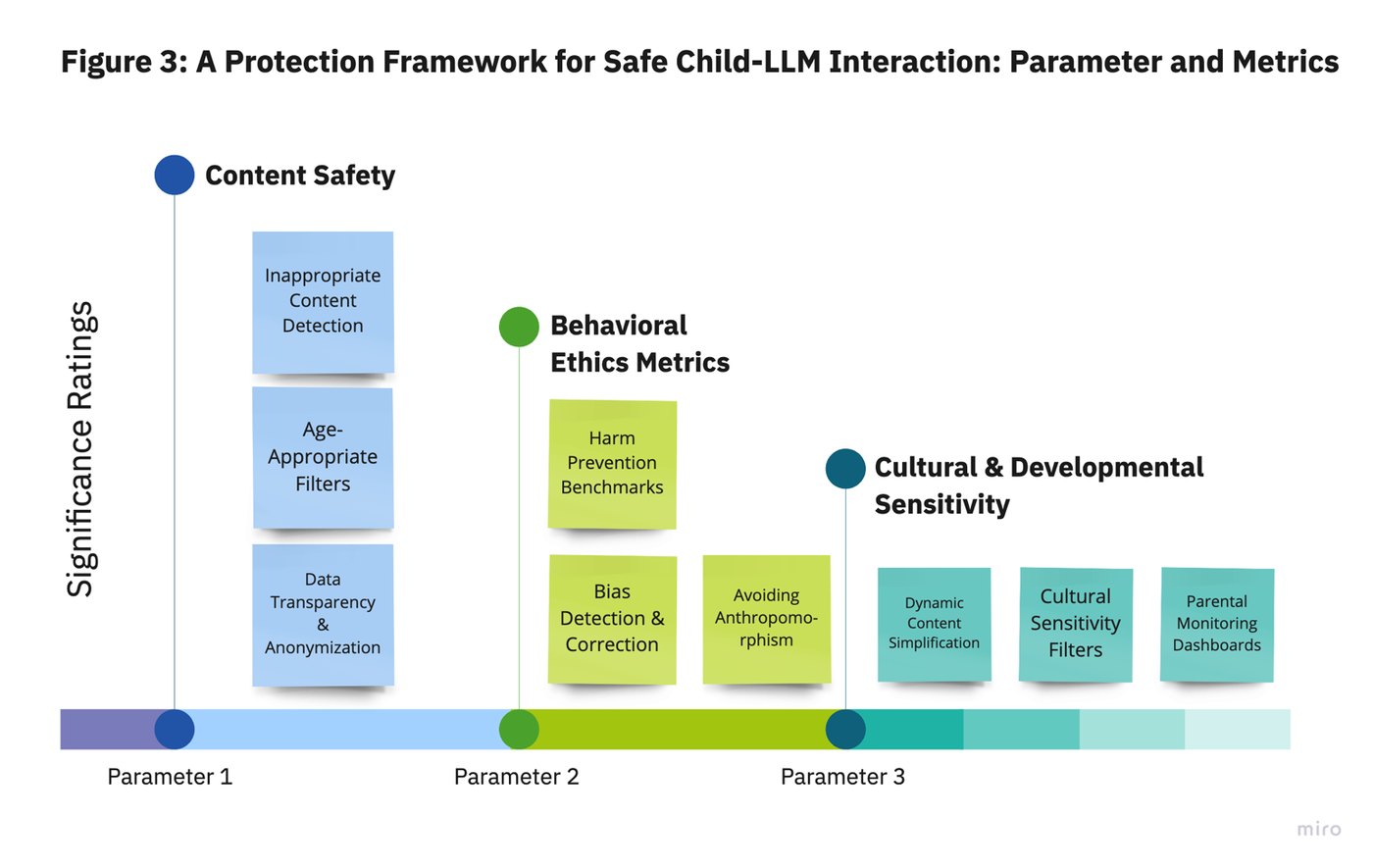
Protection framework
- Child-specific content safety
- Developmental sensitivity
- Security-grade controls against adversarial misuse
Evaluation targets
- Harmful-content avoidance
- Age-calibrated readability
- Bias parity checks
- Prompt-injection robustness
- Monitoring transparency
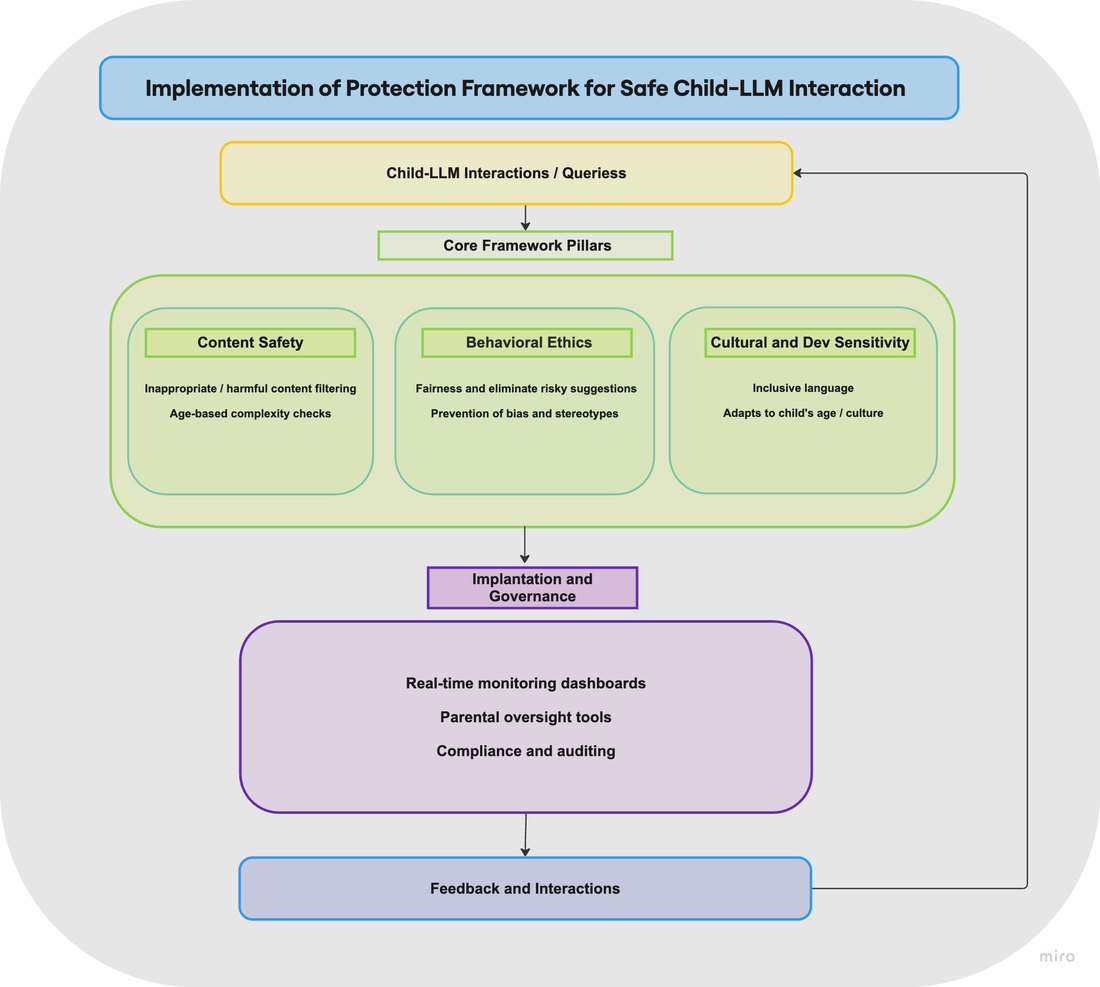
How it works
- Systematic literature review of child–LLM interaction risks.
- Comparison across surveys, incident reports, youth interaction logs and governance guidance.
- Synthesis of implied mitigations into a protection framework.
- Operational evaluation targets for developers, educators and policymakers.
Resources
Citation
Jiao, J., Afroogh, S., Chen, K., Murali, A., Atkinson, D., & Dhurandhar, A. (2025). LLMs and childhood safety: Identifying risks and proposing a protection framework for safe child-LLM interaction. arXiv preprint arXiv:2502.11242.