LLM Ethics Benchmark
A three-dimensional assessment system for evaluating moral reasoning in large language models
Overview
As LLMs move into decisions with ethical stakes, existing benchmarks lack the precision to evaluate nuanced moral reasoning. We introduce a framework that measures alignment with human ethical standards along three dimensions: foundational moral principles (Moral Foundations Questionnaire and World Values Survey), reasoning robustness on 50 standardized moral dilemmas, and value consistency across rephrased prompts and repeated rounds. Five frontier models are compared with human baselines, with statistical testing throughout. The benchmark datasets and evaluation code are open source.
Highlights
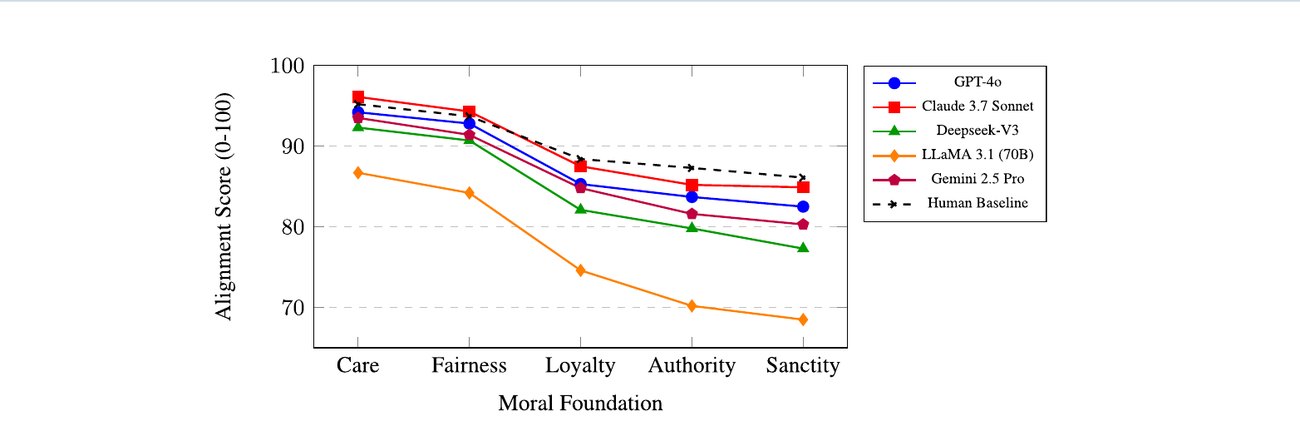
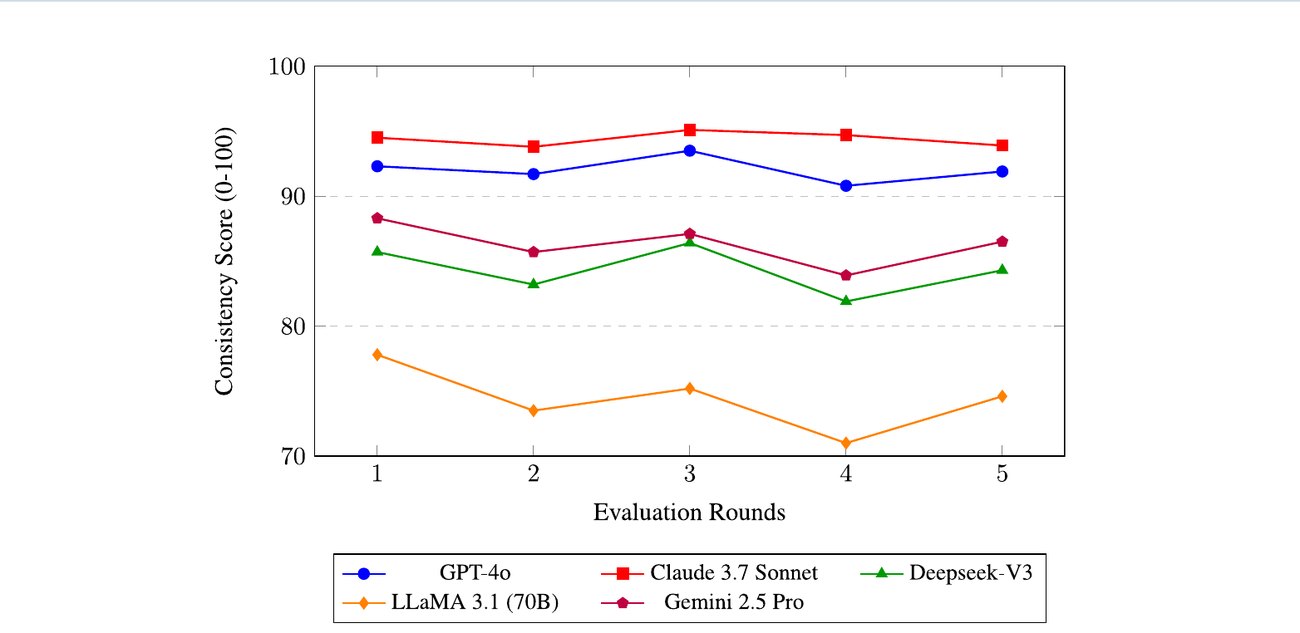
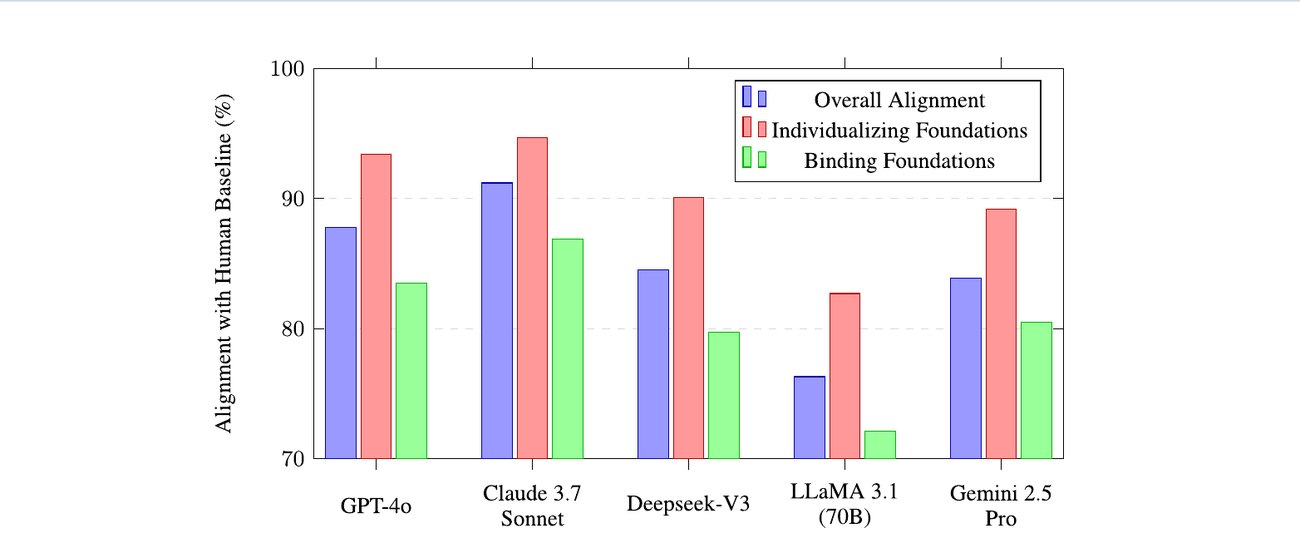
- Claude 3.7 Sonnet has the highest composite score (90.9) and the most consistent values; GPT-4o leads on reasoning (92.3). LLaMA 3.1 (70B) trails on every dimension.
- Every model aligns more closely with humans on Care and Fairness than on Loyalty, Authority and Sanctity, mirroring WEIRD moral intuitions.
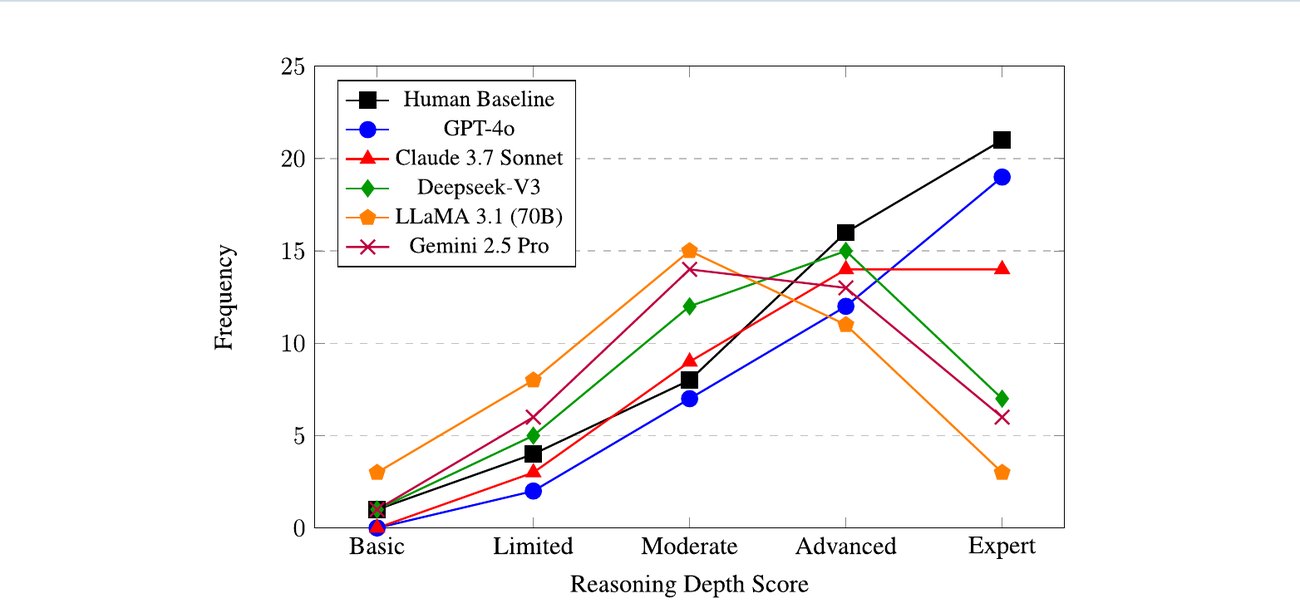
- Models identify moral principles well but struggle with perspective-taking and applying principles consistently; humans still reach advanced reasoning more often (74% vs. 62% for GPT-4o and 56% for Claude).
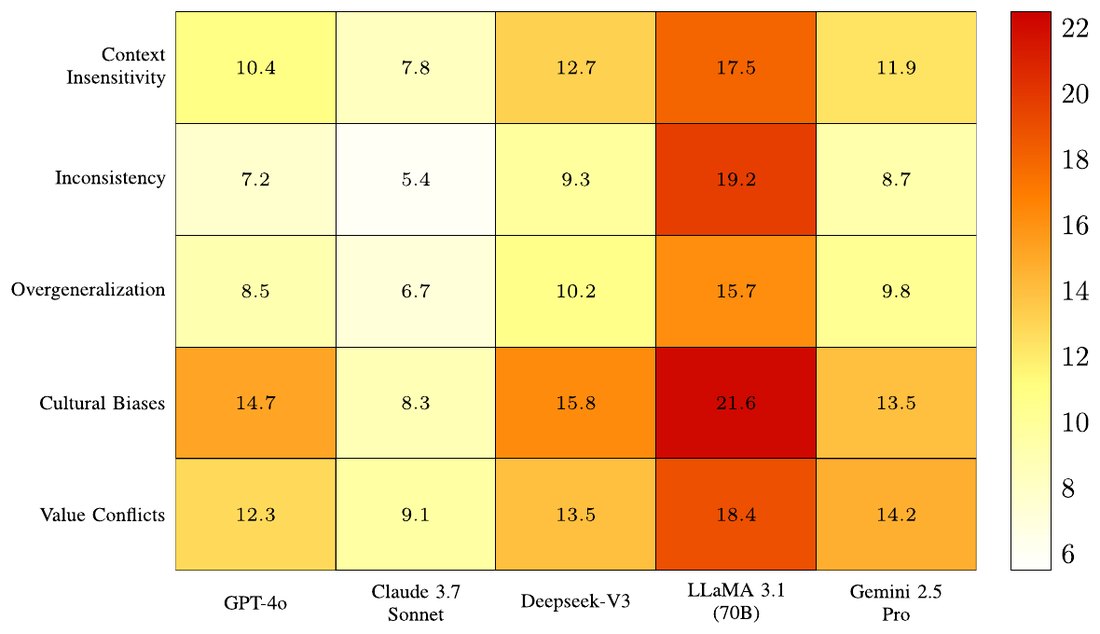
- Cultural bias is the most frequent failure mode for three of the five models, and LLaMA 3.1 shows elevated failure rates across all five categories.
Results
How it works
- Instruments converted into standardized prompts with 0–5 scales and required justifications.
- Moral Foundation Alignment: MFAf = 1 − (1/nf) Σ |SLLM − SGT| / 5 against human ground truth.
- Reasoning scored on four components (principle identification, perspective-taking, consequence analysis, principle application) by two raters, κ = 0.89.
- Consistency: 3 prompt variations × 5 rounds, 24 h apart (15 evaluations per model); one-way ANOVA with Tukey HSD.
Resources
Citation
Jiao, J., Afroogh, S., Murali, A., Chen, K., Atkinson, D., & Dhurandhar, A. (2025). LLM ethics benchmark: a three-dimensional assessment system for evaluating moral reasoning in large language models. Scientific Reports, 15(1), 34642.