Beyond Explainable AI
An overdue paradigm shift and post-XAI research directions
Overview
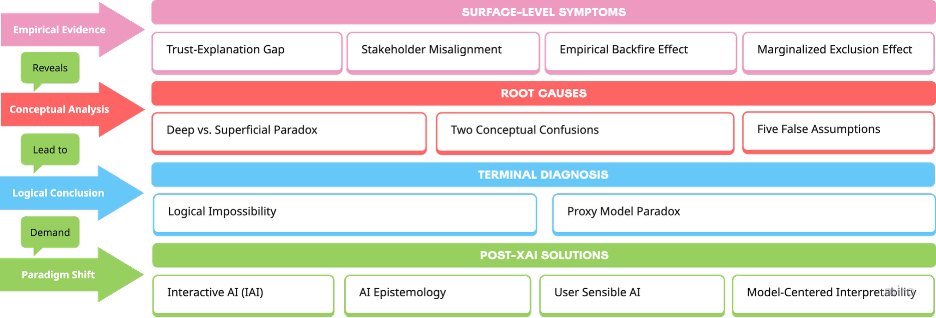
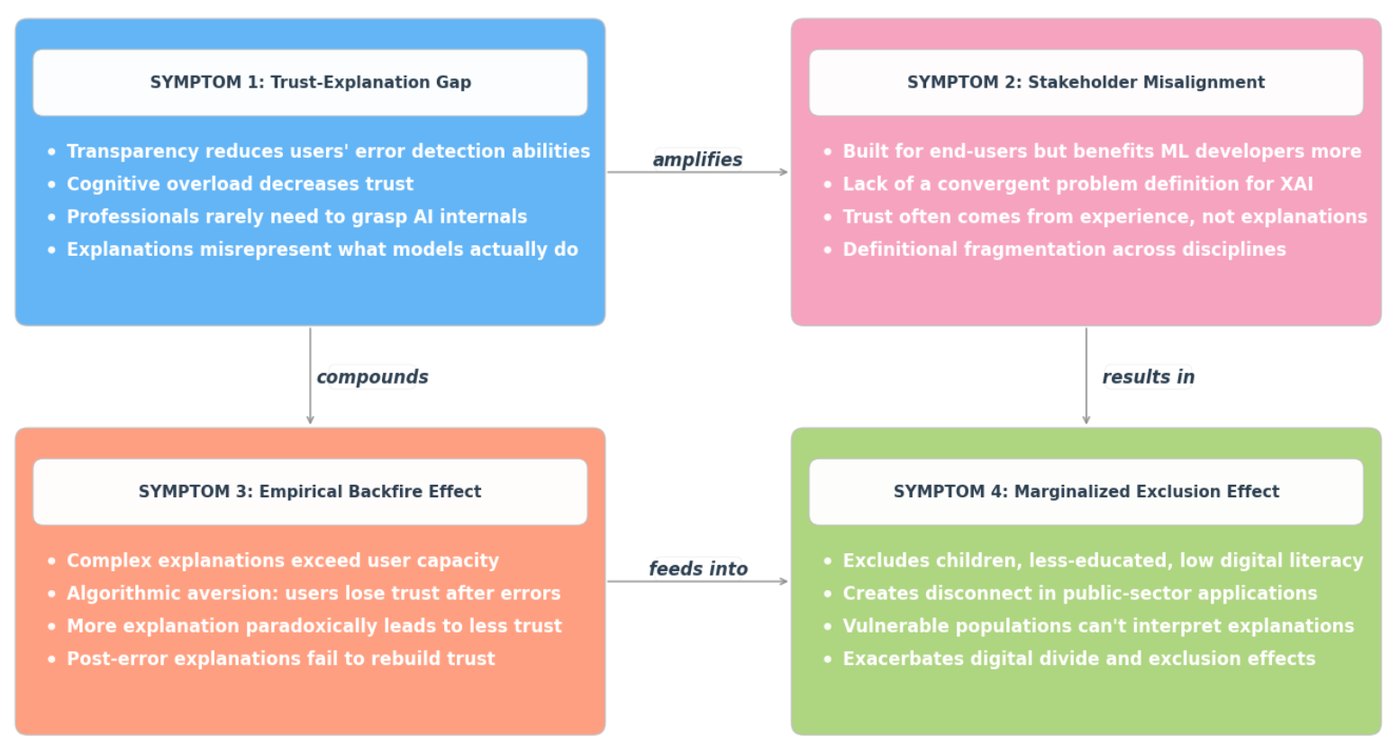
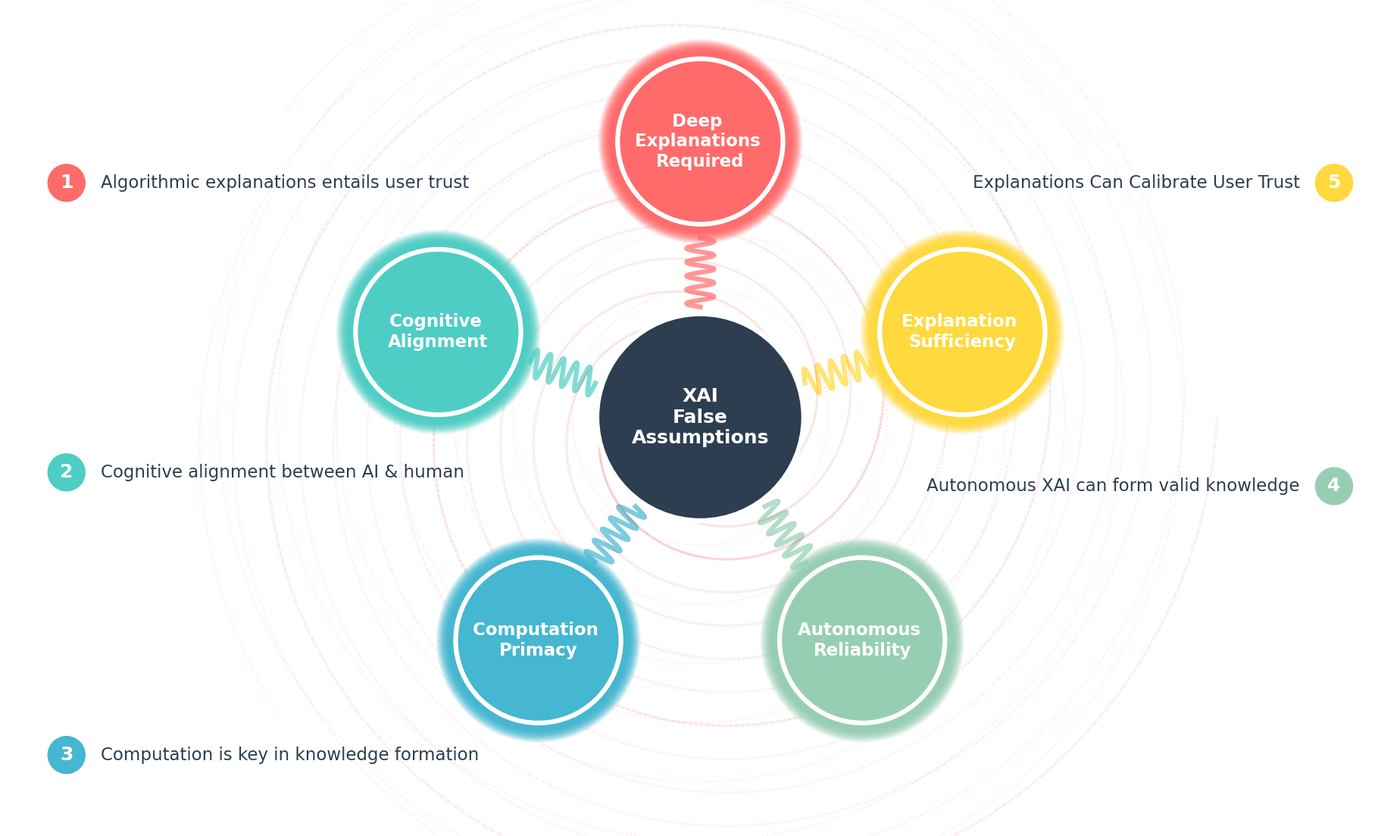
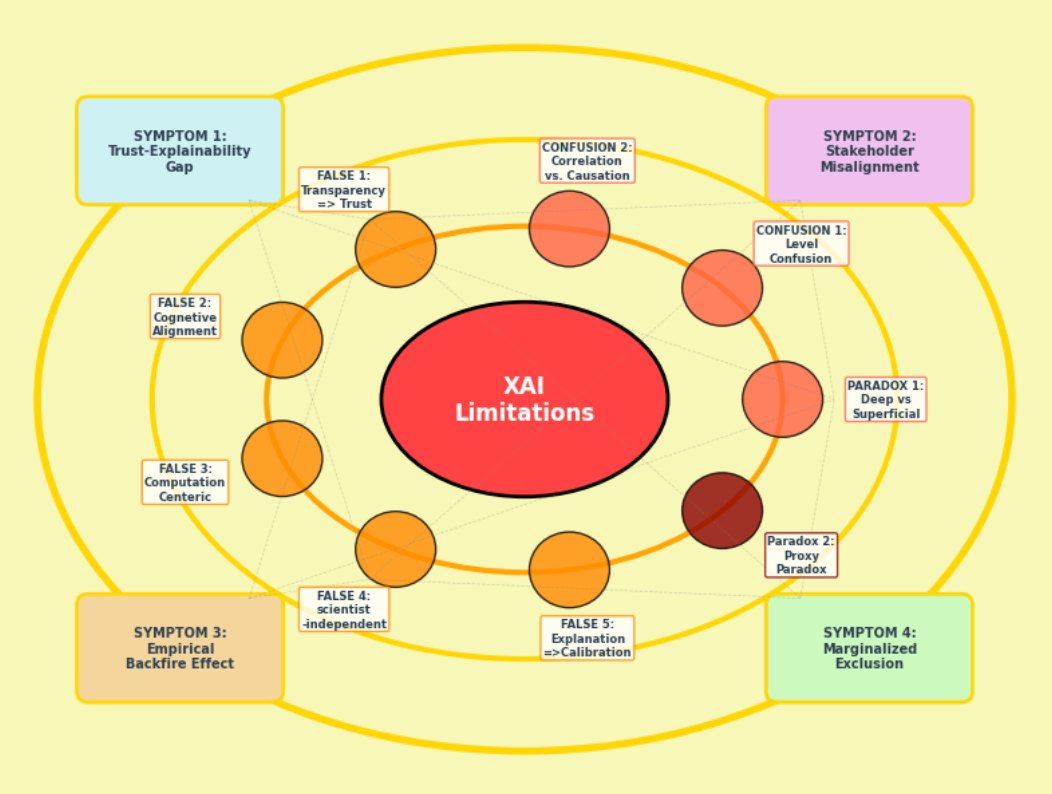
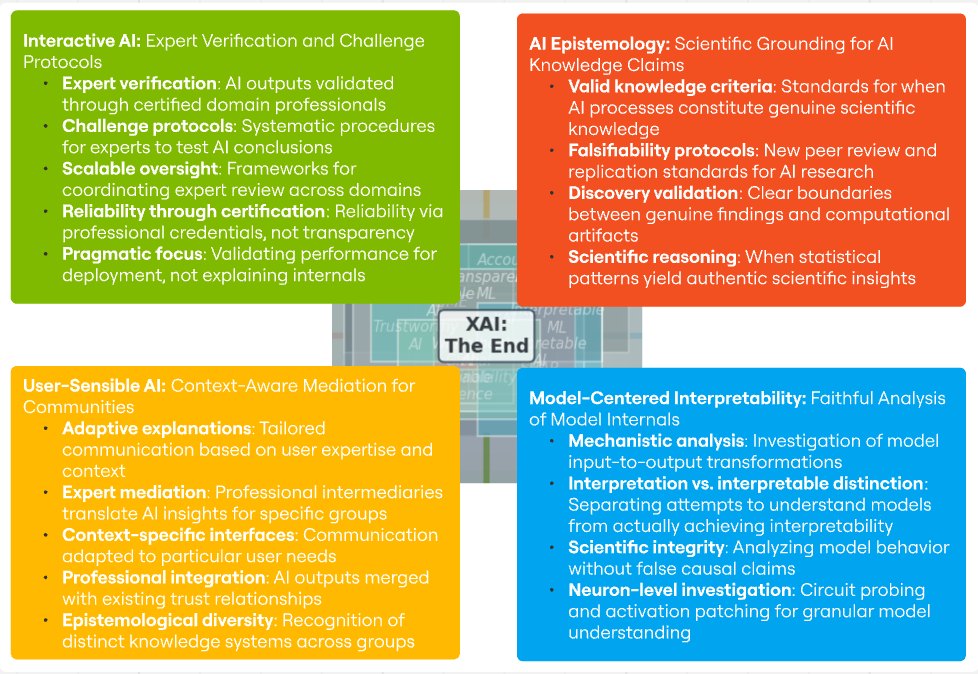
Explainable AI (XAI) promised to make deep neural networks and LLMs understandable. This cross-disciplinary study, written with 49 researchers, examines XAI’s empirical and conceptual record and traces its visible failures back to deeper root causes: two paradoxes, two conceptual confusions and five false assumptions. The conclusion is threefold: experimentally XAI has significant flaws, conceptually it is paradoxical, and pragmatically further attempts to patch it may deepen the confusion. We propose a four-part shift toward reliable, certified AI.
Highlights
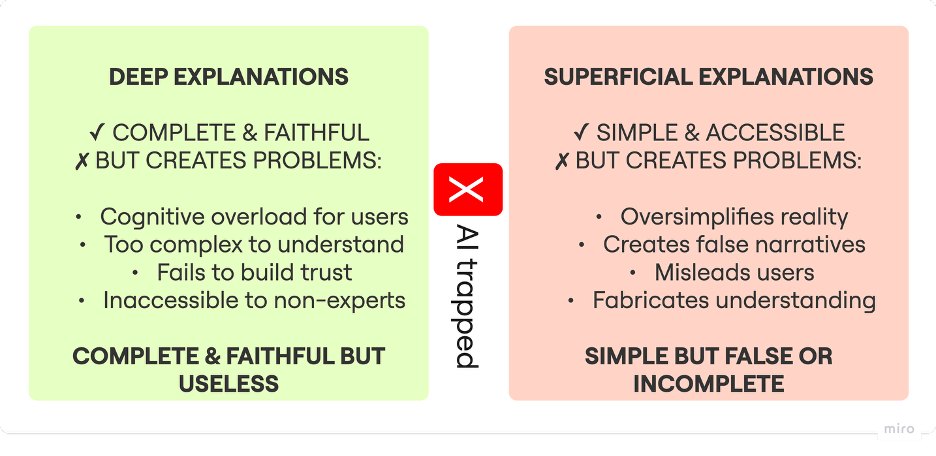
- Faithful explanations of deep models are too complex for people to use, and simple ones are not faithful: the deep–superficial paradox.
- Explaining a model with a simpler proxy either makes the proxy unnecessary or requires explaining the proxy, an infinite regress.
- Common assumptions, such as that explanations calibrate user trust, do not hold up against the evidence.
- Instead of post-hoc explanation, we argue for community protocols that verify and certify AI performance, grounded in AI epistemology and tailored to users.
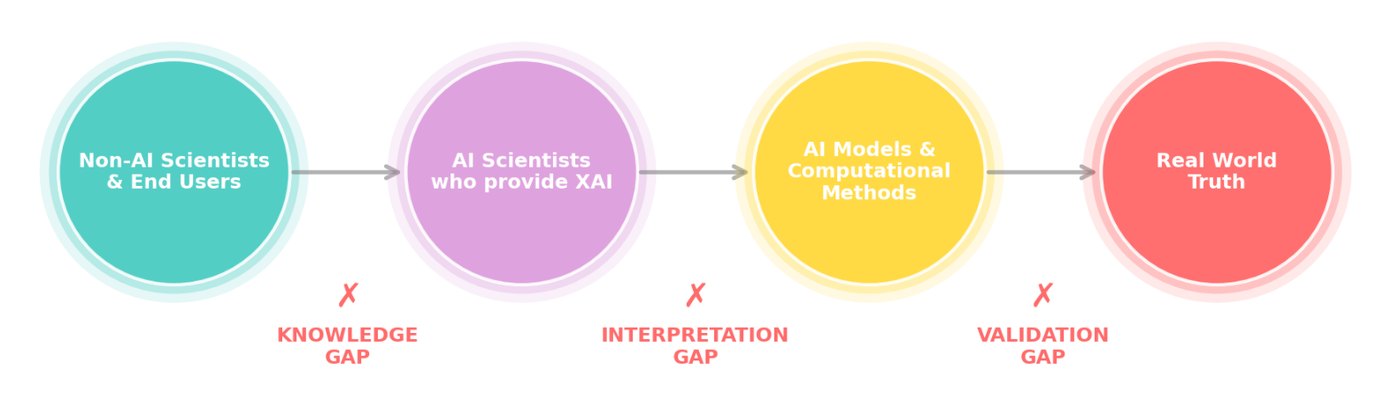
- Three gaps separate end users from real-world truth: a knowledge gap, an interpretation gap and a validation gap (Fig. 4).
Framework
How it works
- Cross-disciplinary review of XAI methods for deep neural networks and LLMs.
- Symptom-to-root-cause diagnosis: surface-level empirical flaws traced to deeper conceptual causes.
- Conceptual analysis of paradoxes, confusions and false assumptions in XAI.
- Synthesis into a four-pronged research agenda for certified, reliable AI.
Resources
Citation
Afroogh, S., et al. (2026). Beyond explainable AI (XAI): An overdue paradigm shift and post-XAI research directions. Under review. arXiv:2602.24176.